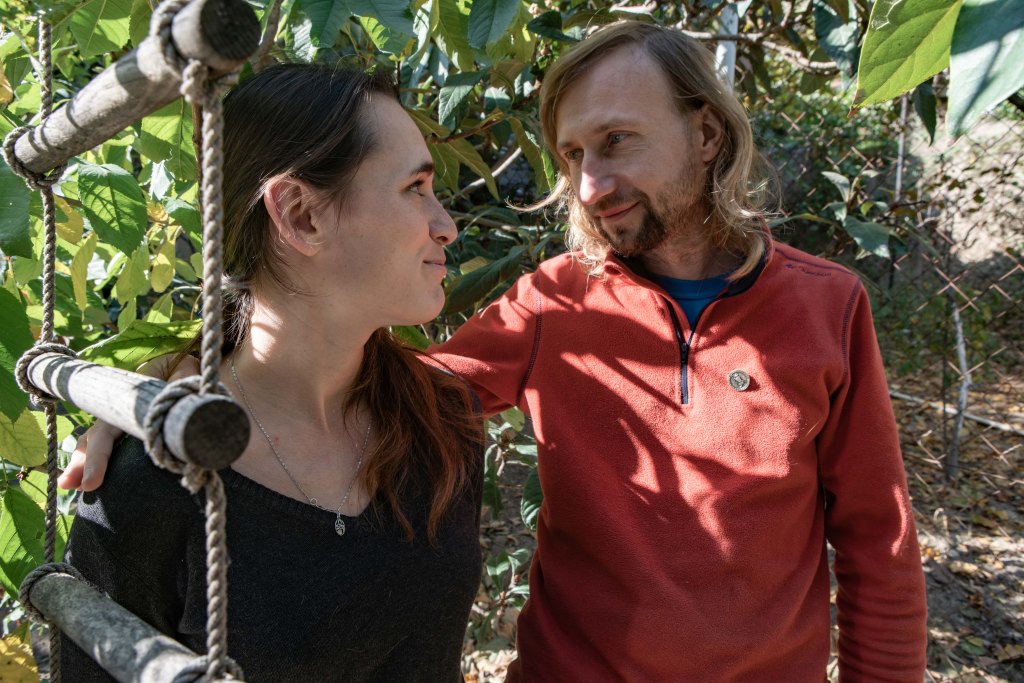
How Ukrainian-Russian couples are faring after a year of war
Partners caught on different sides of the yearlong conflict reflect on how it has affected their relationships.
Tbilisi, Georgia – When Oksana Slipchenko first exchanged glances with the man she would eventually marry, she was immediately drawn to his eyes.
“They were like … a small kitten’s eyes,” she recounts with a giggle. She pauses to think of a more appropriate term. “I think defenceless is more the word.”
As the couple sits in their sparsely furnished one-bedroom apartment in Tbilisi on a November afternoon, Oksana’s husband Sergio Skudin flushes with embarrassment.
Oksana, who is Ukrainian, and Sergio, who is Russian, first met on New Year’s Eve 2018, during a three-day train journey across Belarus. Oksana, a professional pianist who worked as a concertmaster at a music school in Irpin, Ukraine, was immediately drawn to the shy, soft-spoken Sergio, an archaeologist and independent researcher who often worked on expeditions for the Russian Academy of Sciences.
An initial friendship soon blossomed into a long-distance relationship, with the two frequently crisscrossing borders to see each other. In the summer of 2020, they married in Kyiv. Oksana quit her job and moved to Russia, accompanying Sergio on archaeological digs, including a months-long expedition to the site of the ancient Greek colony of Chersonesus in Sevastopol in Russian-occupied Crimea.
‘Had to get away’
At the time of the invasion, the couple was living in the southeastern Russian city of Rostov-on-Don. “I was full of hatred for Russia and pain for my people. I knew I just had to get away,” 30-year-old Oksana recalls.
Sergio suggested they head south to Georgia, one of the few countries where they could enter visa-free with their respective passports. After a long overland bus trip, they crossed into Georgia on March 4, travelling just with what they could carry in their backpacks.
Since arriving in the Georgian capital, the couple has moved homes twice. Rent has soared with the influx of an estimated 100,000 Russian exiles – some of them opposed to the war and some escaping sanctions or mobilisation – who far outnumber the 25,000 Ukrainians who sought refuge in Georgia.
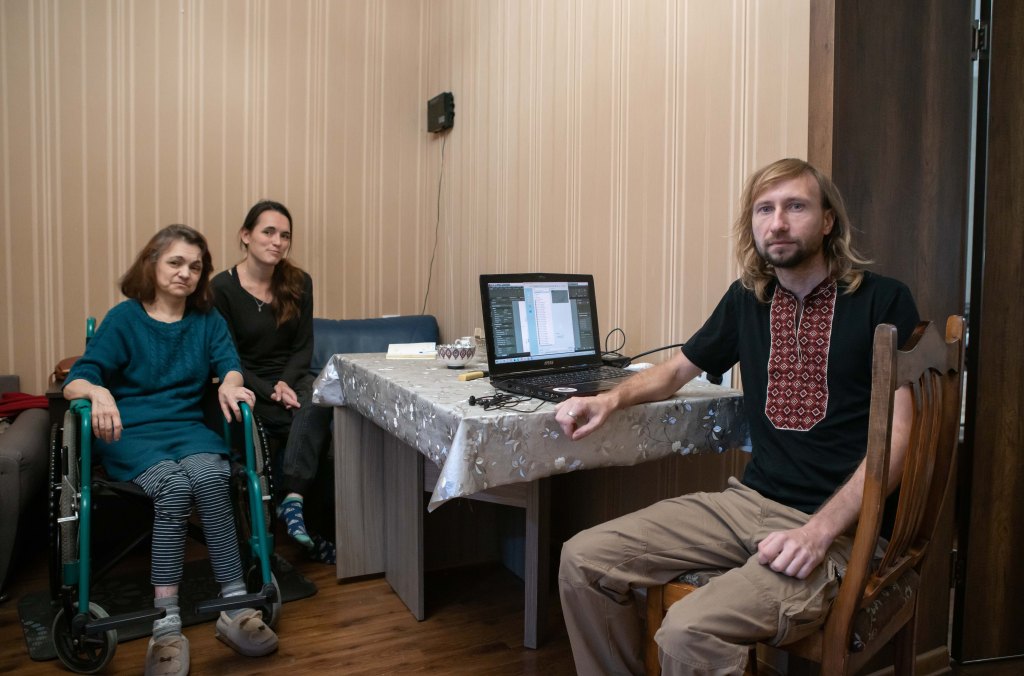
One of their biggest initial challenges was finding employment. Oksana found work as a piano teacher and tuner and occasionally plays in restaurants and bars. But 38-year-old Sergio has struggled to bring in an income.
Instead, he has been caring for Oksana’s mother, a wheelchair user who survived the Russian siege of Bucha in the early weeks of the fighting by hiding in a basement. She was evacuated to Tbilisi and now shares the apartment with the couple.
New tensions
Sergio has an air of bewilderment as he tries to describe his thoughts about the war. “I feel disappointment and shame,” he says finally.
He says he is opposed to the war, but at a time when many Ukrainians accuse Russian citizens of inaction, he believes common Russians are powerless. “Even if people protested daily, I doubt it can change anything with the strong military regime in place,” he explains.
But he admits that he might not have left Russia if not for Oksana.
“Sergio is not a political person,” Oksana chimes in defensively.
She says that her anger is directed towards the Russian regime and its army of “orcs” – not at Russian citizens. “I still try to believe in humanity,” she explains.
But the war has brought new tensions to their life together. Financial worries, uncertainty about the future and Sergio giving up his academic career have strained the relationship.
Oksana often feels guilty that Sergio has not found work, and as the more digitally savvy of the two, is helping him learn a software programme in the hopes that he can continue his career online.
Discussions about the war itself have also been a source of friction, with the couple disagreeing over differences in the words they use. Only once has this turned into a huge argument after Sergio read out Russian news headlines referring to the October bombing of a key bridge in Crimea as a “terrorist act”.
“I got mad and screamed how it could be a ‘terrorist attack’ to bomb a bridge” when Russian soldiers “were bombing apartments and killing children and women every day”, Oksana recalls.
After that incident, they have tried not to talk about the war.
When asked if he wants to return home someday, Oksana teasingly says that he could go and “get mobilised”. Sergio laughs uneasily. Chided by her mother, Oksana quickly apologises for her joke. “I can’t imagine how to live life without him,” she says.
Like Oksana and Sergio, other Ukrainian-Russian couples in Georgia are having to navigate the new challenges the war has brought to their relationships.
 Pearly Jacob