Until recently few outsiders knew the wooden mosques dotting the highlands of Georgia existed, leaving many of them to deteriorate. The rediscovery of the architectural gems has sparked a movement for their preservation.
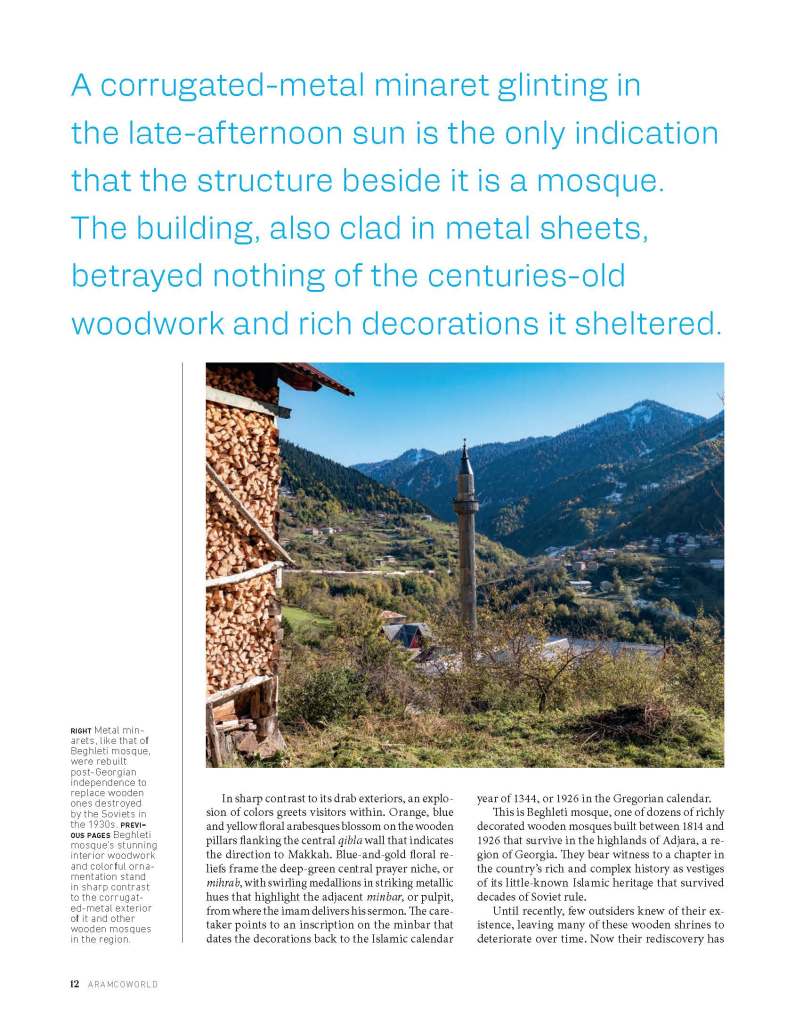
A corrugated-metal minaret glinting in the late-afternoon sun is the only indication that the structure beside it is a mosque. The building, also clad in metal sheets, betrayed nothing of the centuries-old woodwork and rich decorations it sheltered.
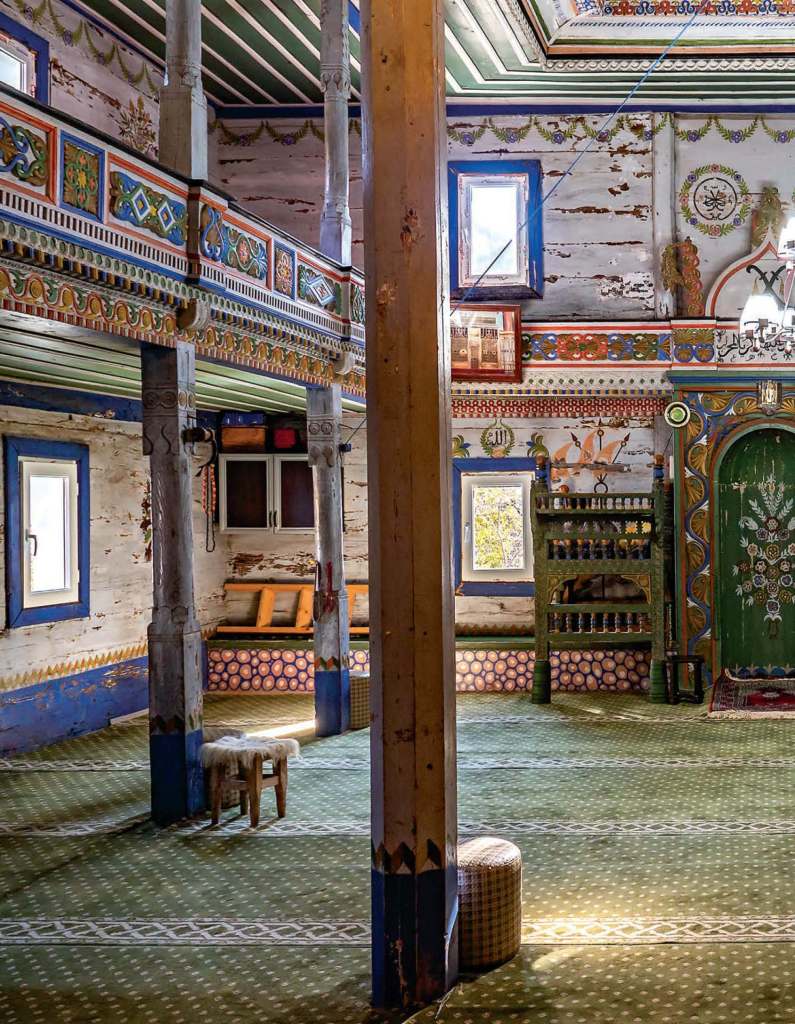
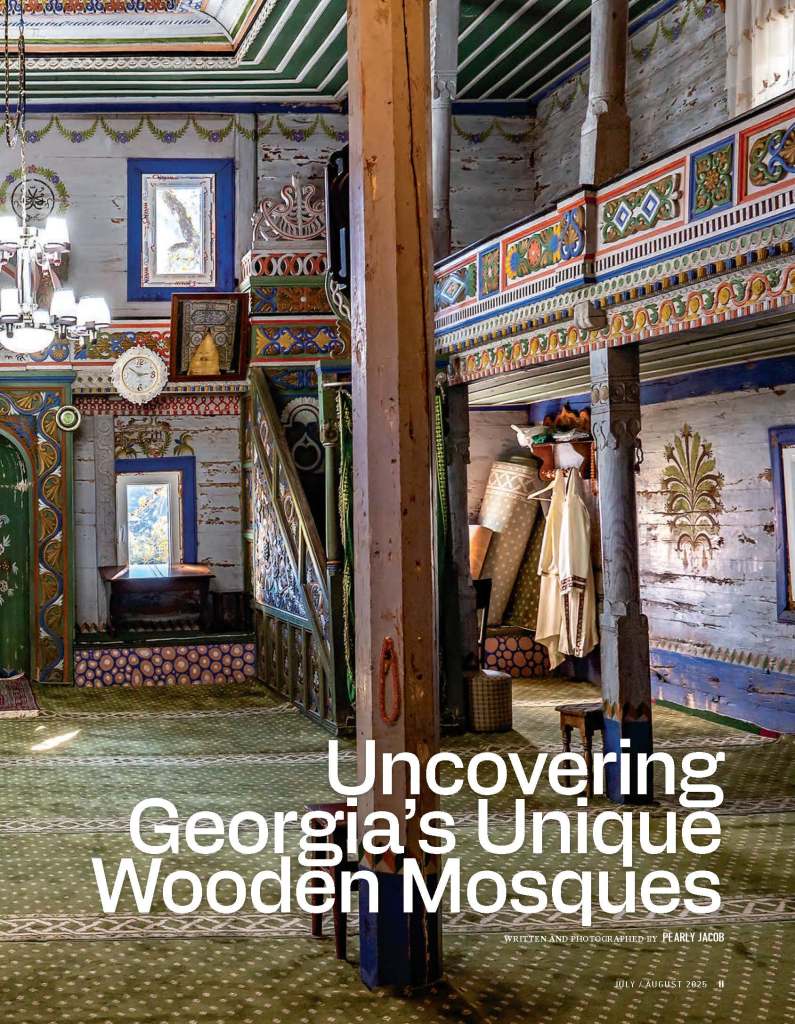
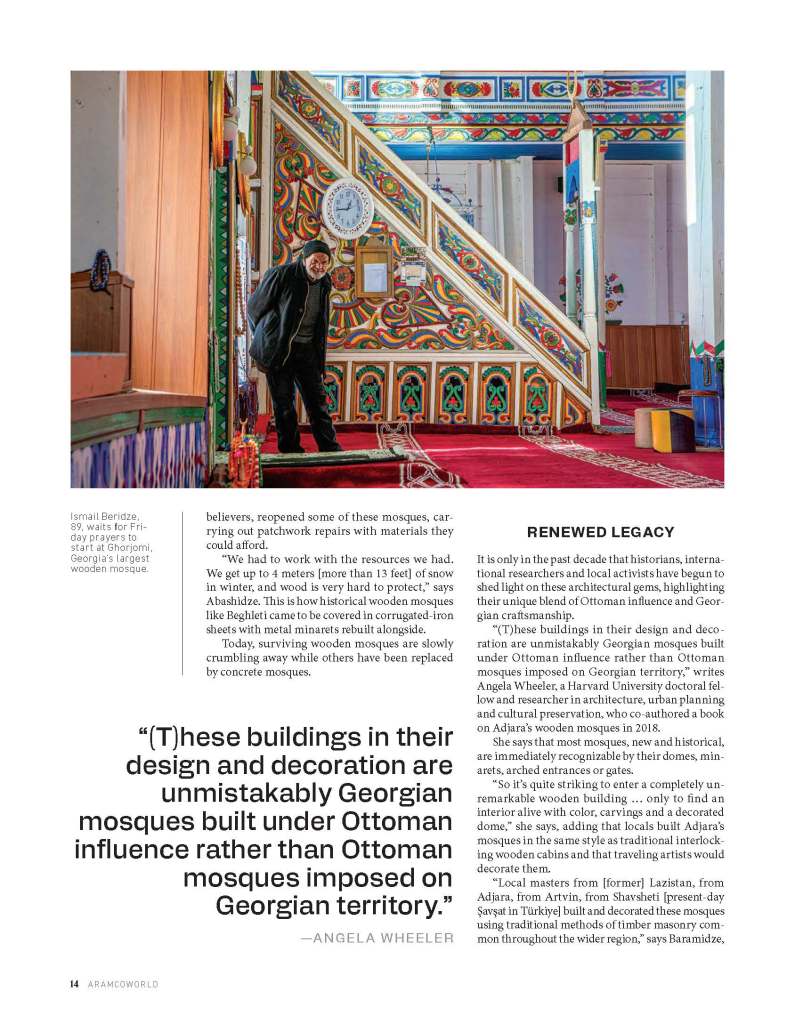
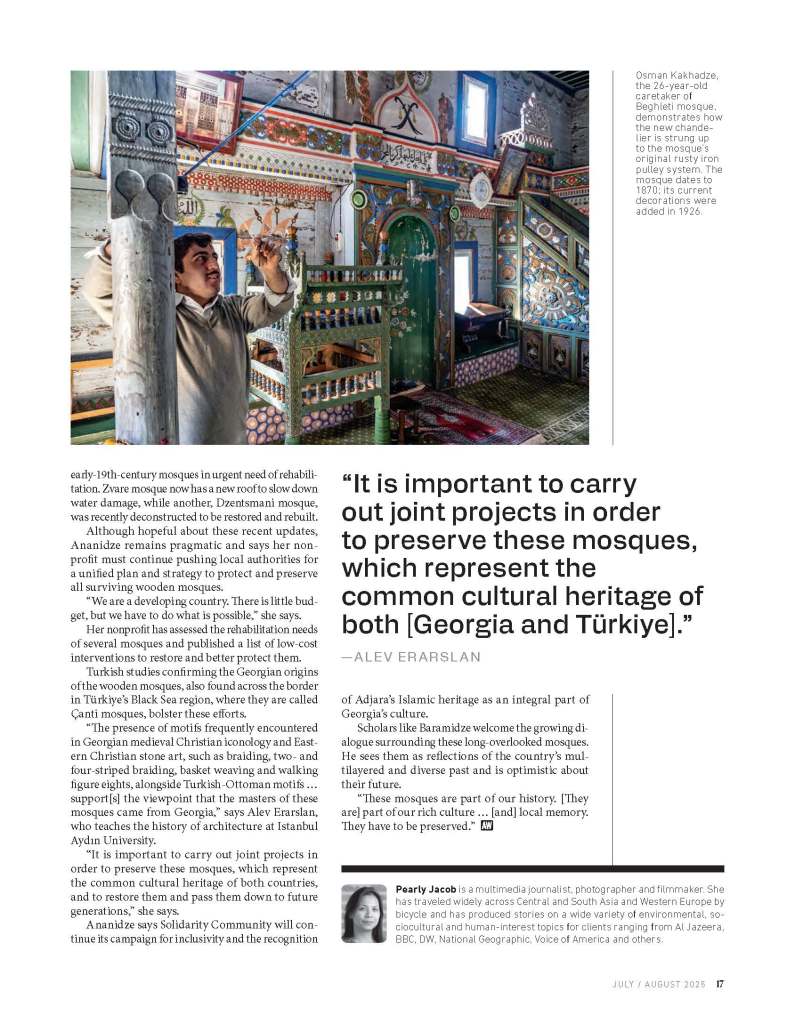
In sharp contrast to its drab exteriors, an explosion of colors greets visitors within. Orange, blue and yellow floral arabesques blossom on the wooden pillars flanking the central qibla wall that indicates the direction to Makkah. Blue-and-gold floral reliefs frame the deep-green central prayer niche, or mihrab, with swirling medallions in striking metallic hues that highlight the adjacent minbar, or pulpit, from where the imam delivers his sermon. The caretaker points to an inscription on the minbar that dates the decorations back to the Islamic calendar year of 1344, or 1926 in the Gregorian calendar.
This is Beghleti mosque, one of dozens of richly decorated wooden mosques built between 1814 and 1926 that survive in the highlands of Adjara, a region of Georgia. They bear witness to a chapter in the country’s rich and complex history as vestiges of its little-known Islamic heritage that survived decades of Soviet rule.
Read the story online at Aramco World.
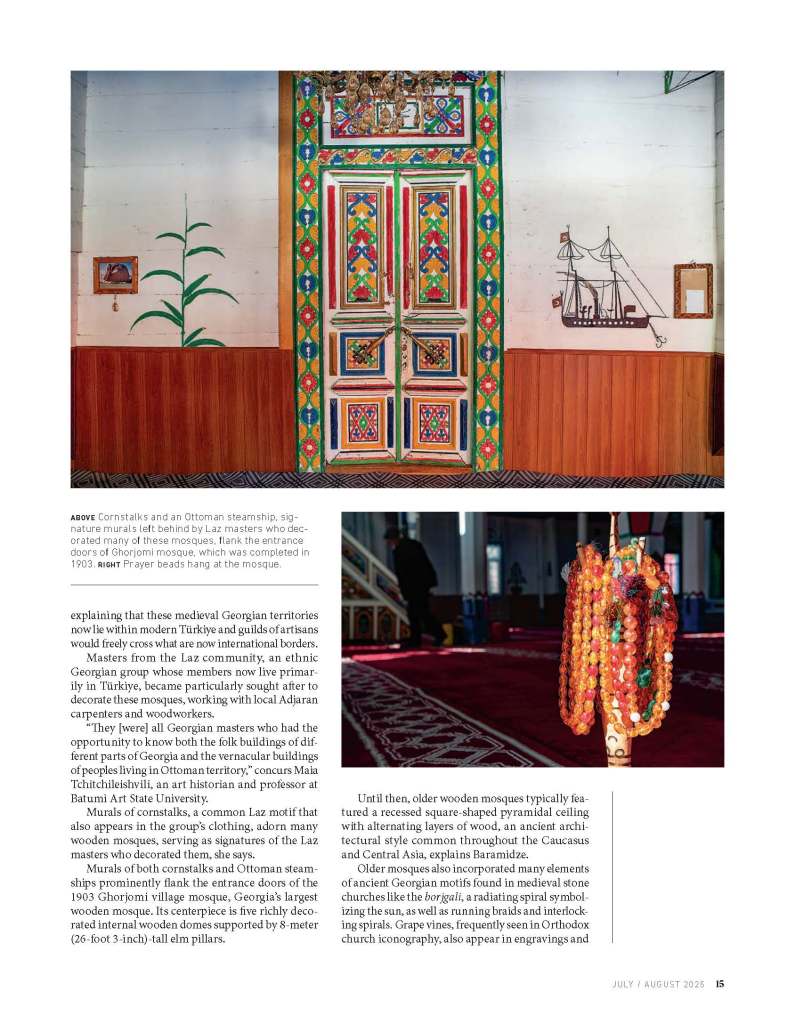
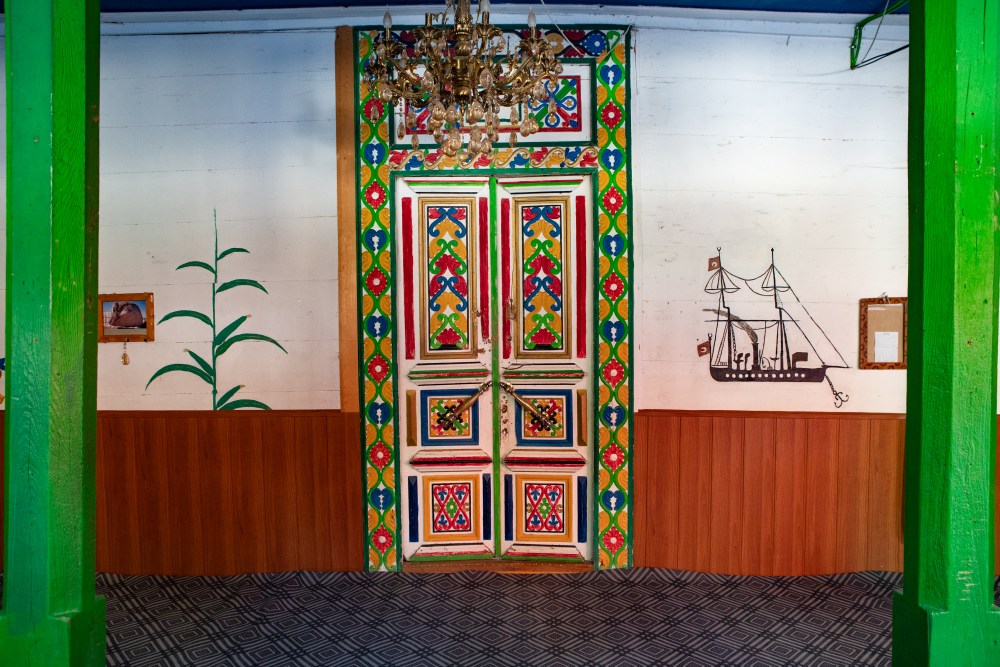
Cornstalks and an Ottoman steamship, signature murals left behind by Laz masters who decorated many of these mosques, flank the entrace doors of Ghorjomi Mosque that was completed in 1903. 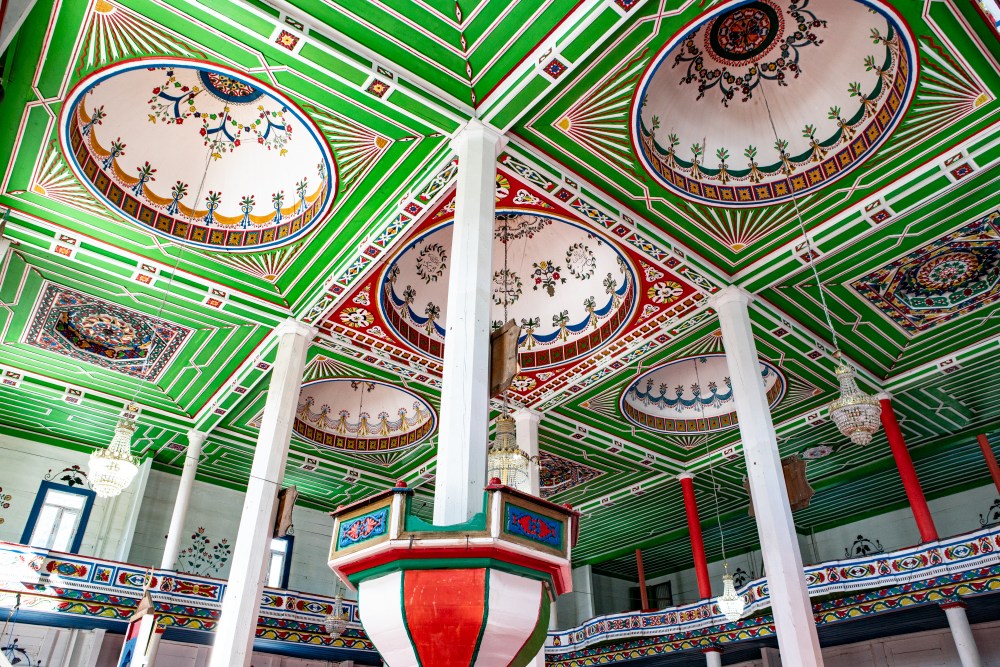
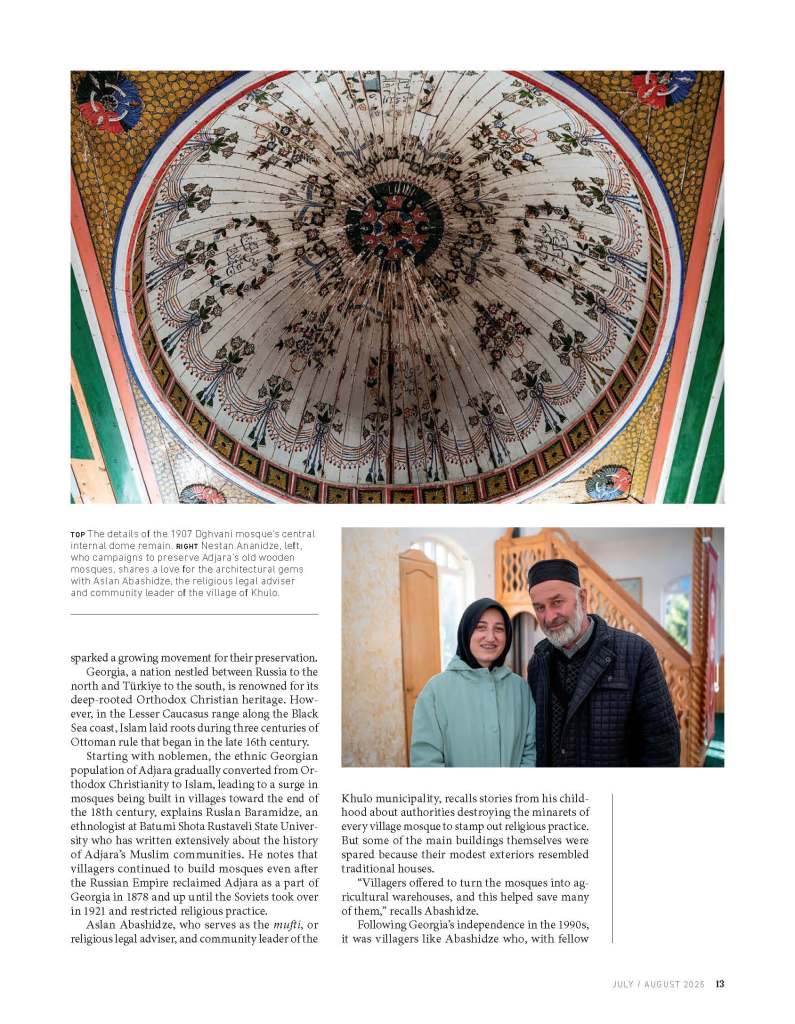
The centerpiece of Adjara’s largest wooden mosque – the Ghorjomi mosque – is a large central dome supported by eight-meter-tall elm wood pillars and surrounded by four smaller domes, all richly decorated in floral motifs. 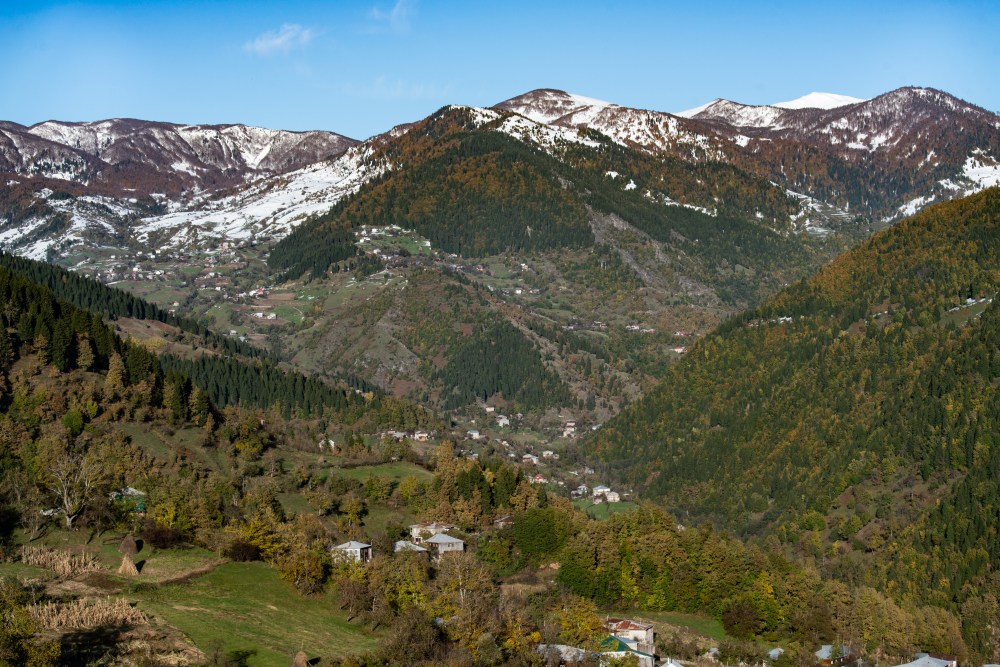
The end of the 18th century saw a surge in mosque building in isolated highland villages in Adjara, a scenic region of Southwest Georgia. 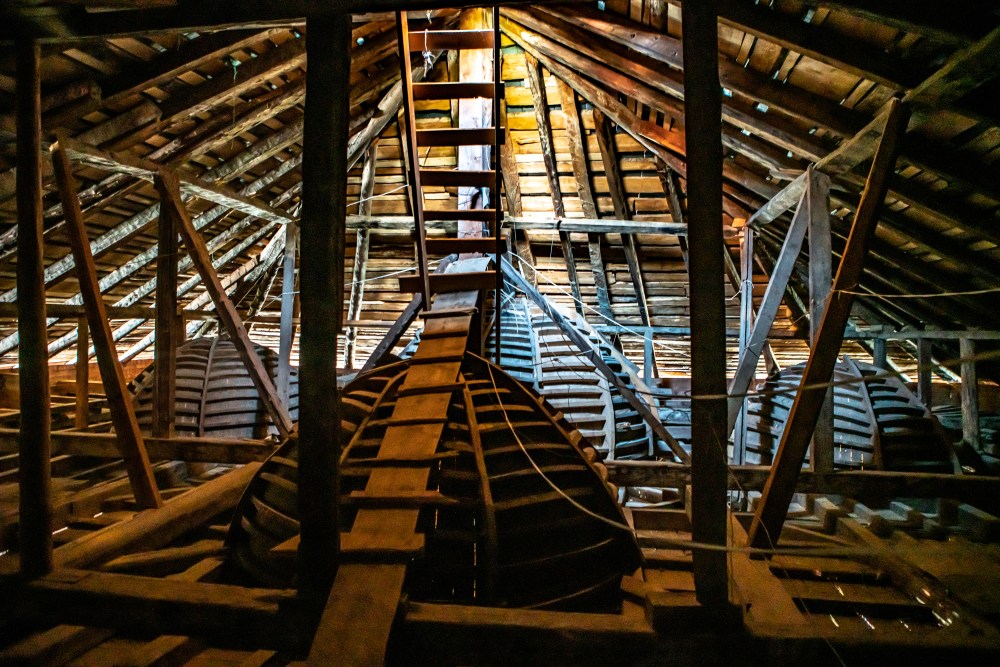
An interior view from the attic of Ghorjomi mosque’s five internal domes, all crafted from wood and one of the first wooden mosques of the period to feature internal domes. 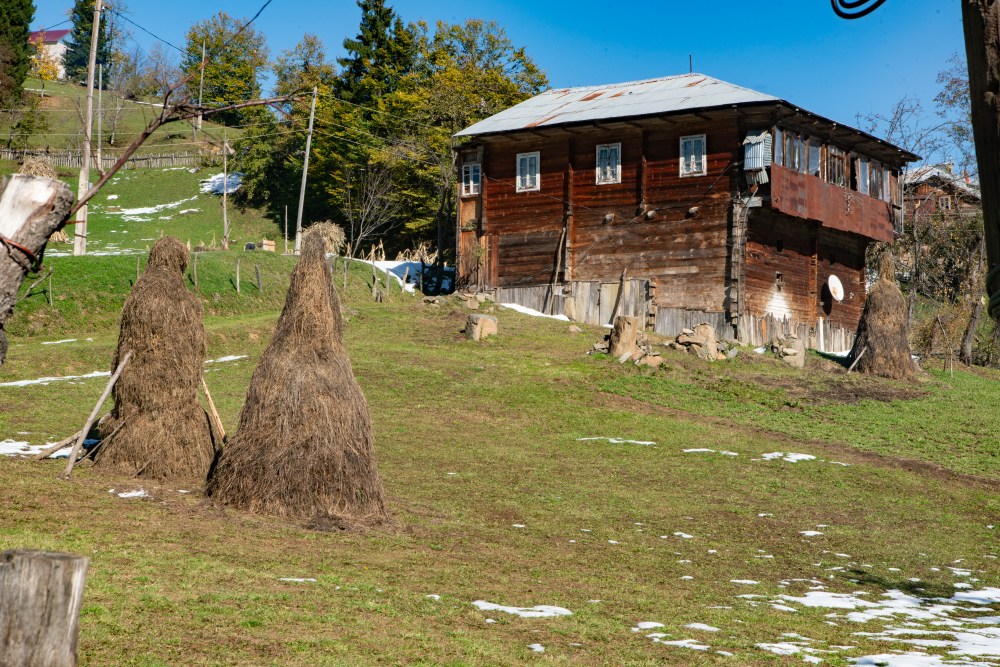
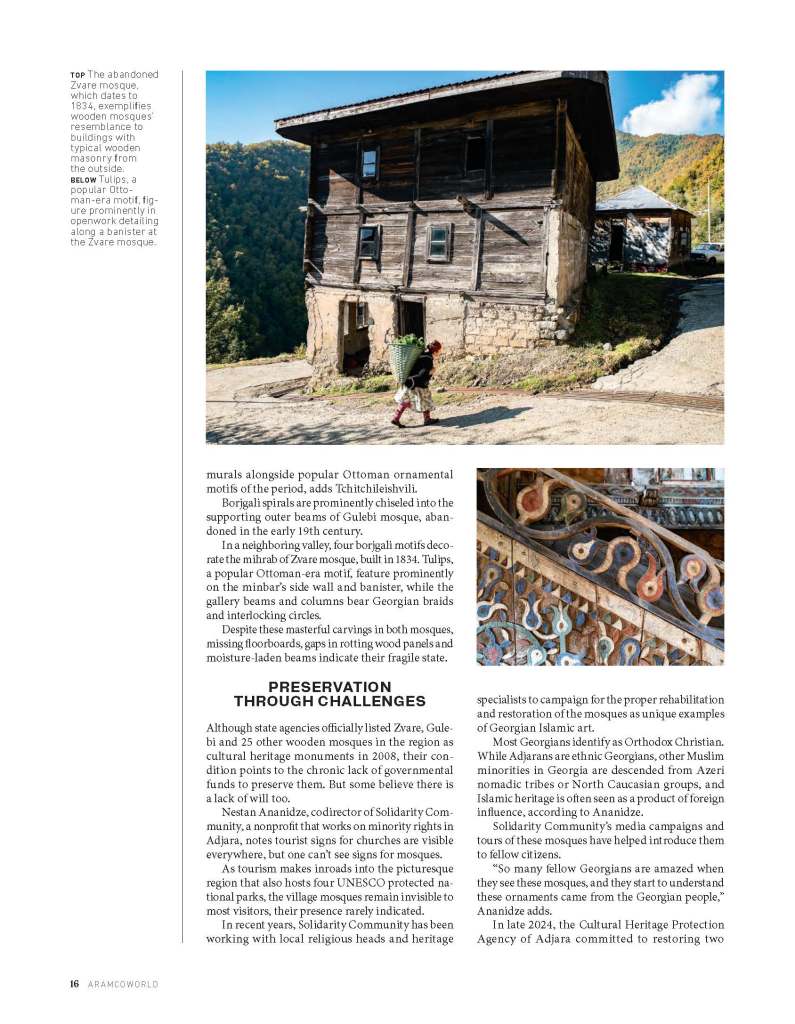
A typical rural Adjarian traditional two-storied interlocking wooden log house. Most wooden mosques were built with the same external architectural style and form. 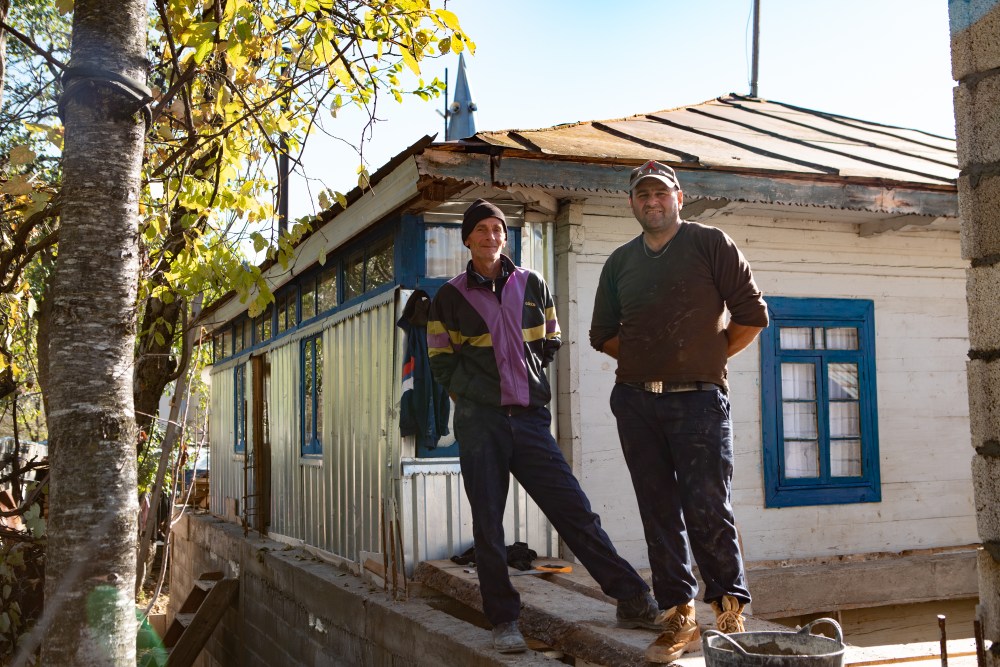
Local builders in Agara village work on renovating a century old wooden house, reinforcing the old stone foundation with concrete blocks and adding an extension to the house, similar renovations that have been done on the region’s historic wooden mosques. 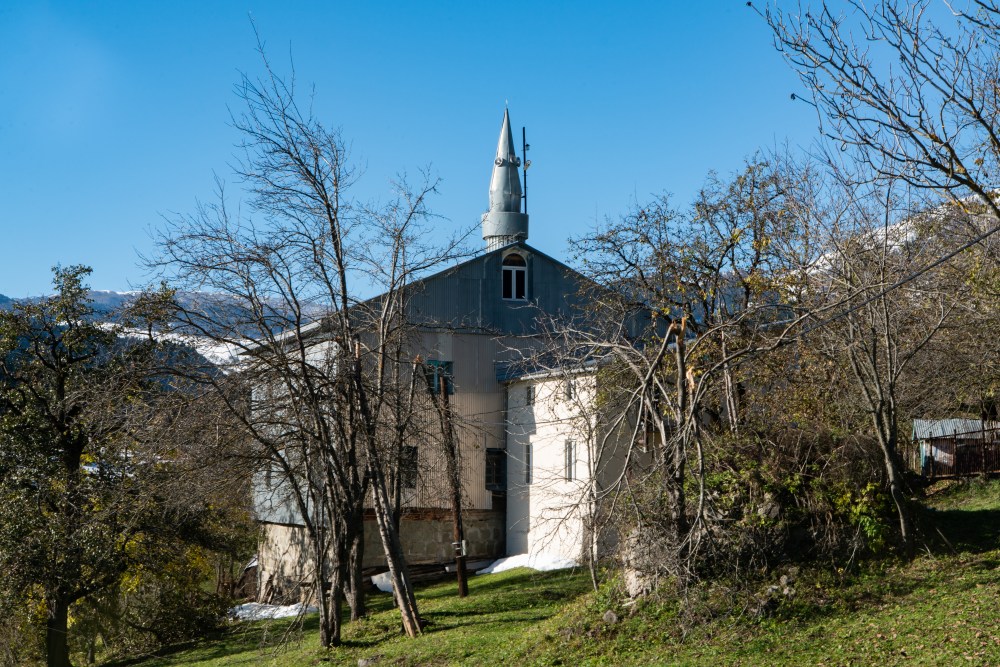
Like many functional mosques in Adjara, the Agara mosque was covered by corrugated sheets, a utilitarian weather-proofing solution commonly seen in these humid coastal mountains to protect old wooden facades. 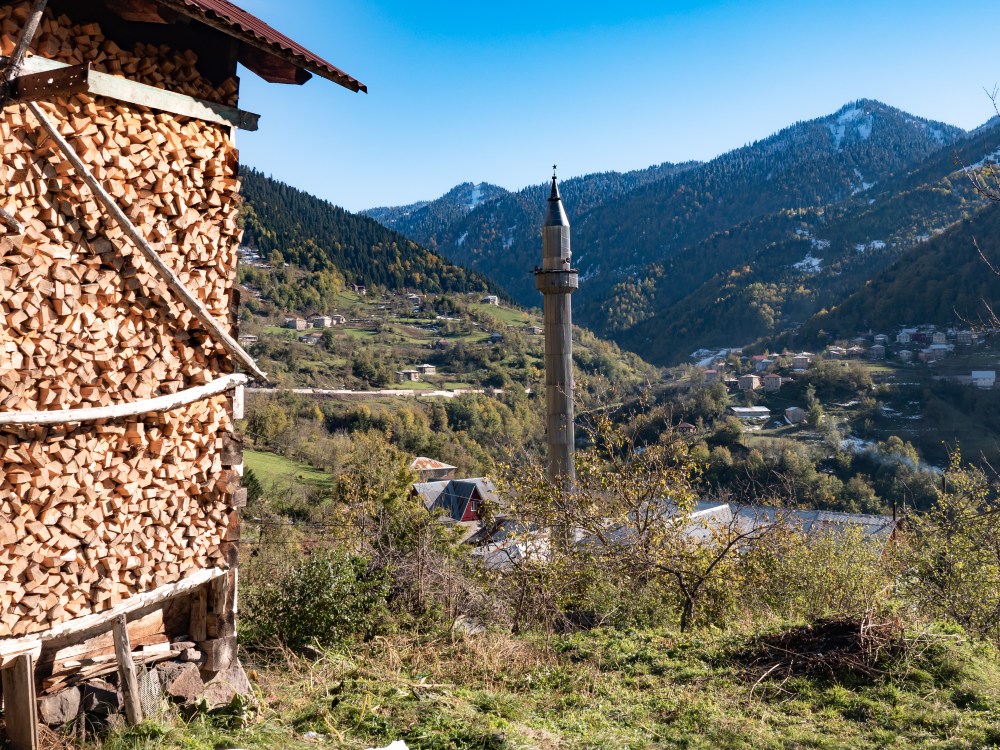
A recently built corrugated metal minaret of Beghleti (the original having been destroyed by the Soviets) marks the others nondescript building beside it as the village mosque, a typical feature of Adjara’s historic wooden mosques that resemble traditional village houses from the outside. 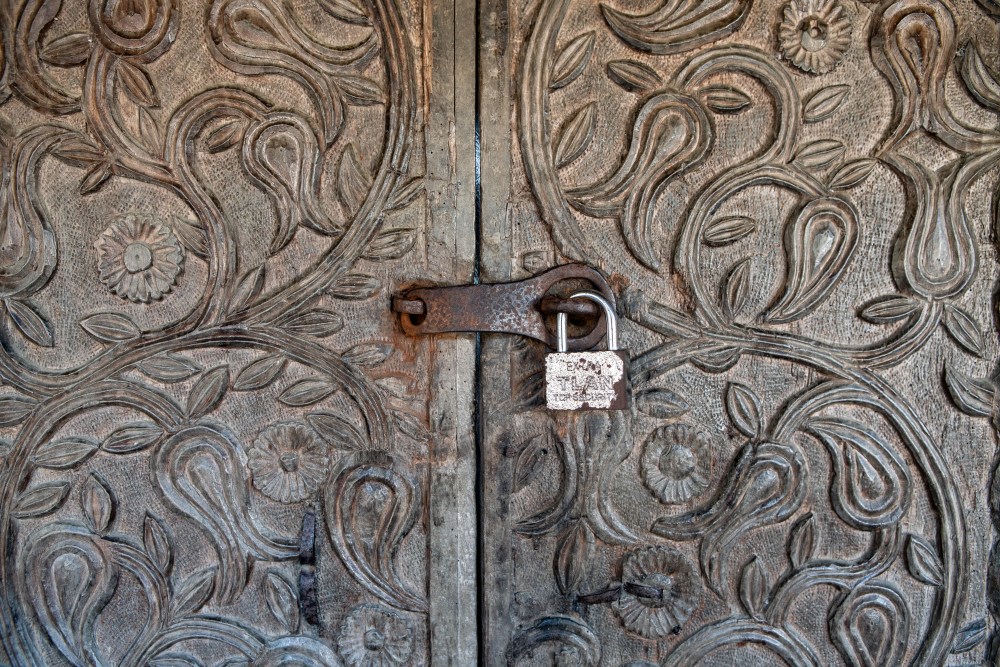
Details of woodwork carvings featuring Ottoman motifs like tulips on the entrance doors of the mid 19th century Kivrike Mosque. 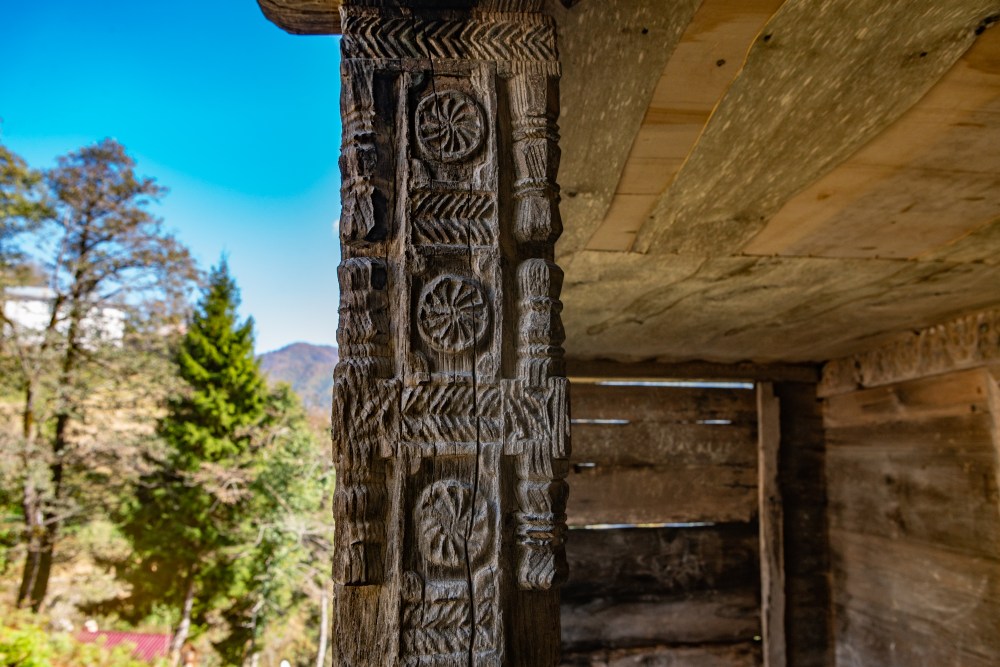
Borjgali spirals, an ancient Georgian motif symbolising the sun, are prominently chiseled into the supporting outer beams of Gulebi mosque, an abandoned mid 19th-century mosque. 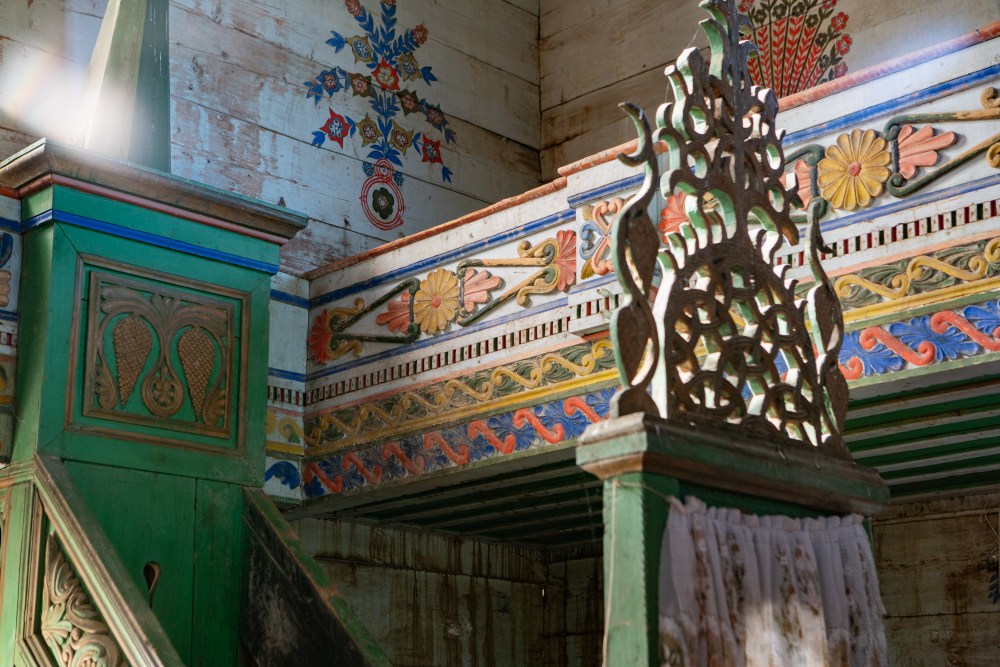
A view of the applied woodwork decorative elements including grapes and other floral patterns on the minbar and gallery of Dghvani mosque. 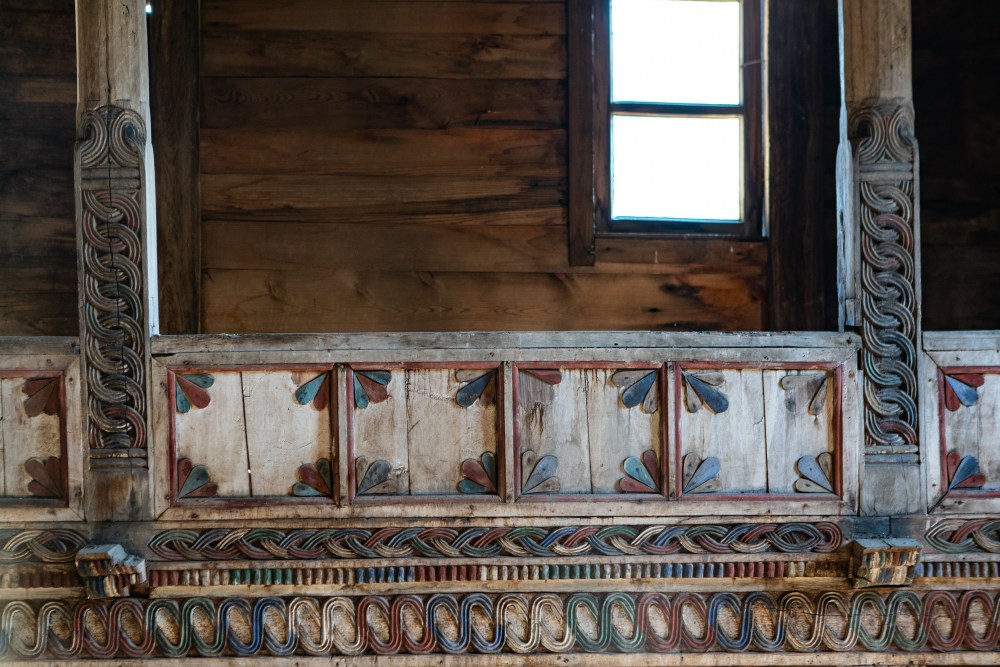
Details of the masterful woodwork carvings featuring ancient Georgian motifs like running braids and interlocking circles that decorate the abandoned Zvare mosque that was built in 1834. 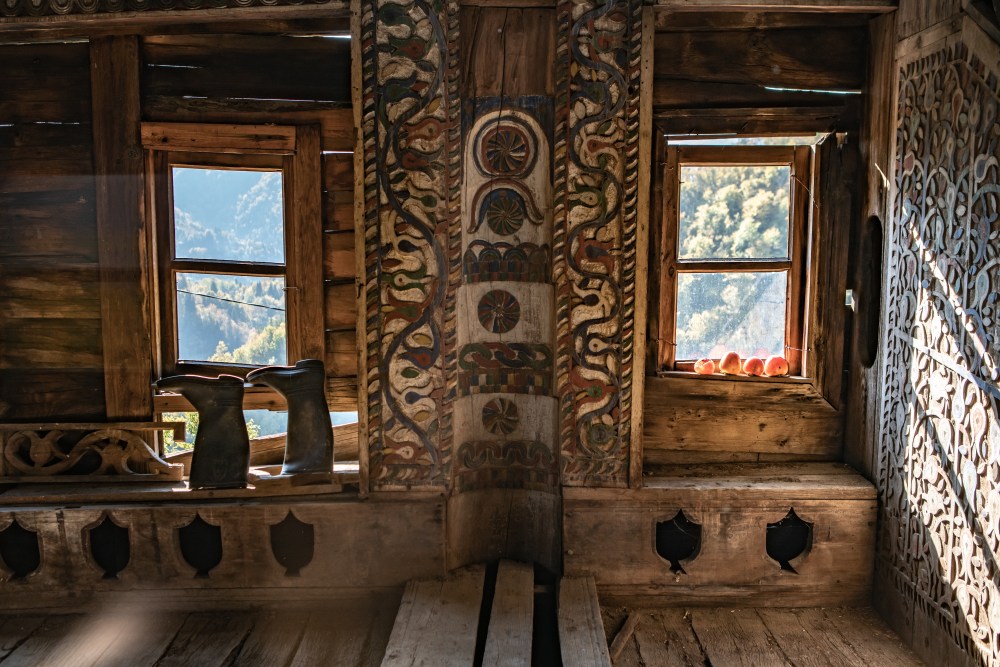
A pair of work boots and four rotting persimmons left on the windowsill amplifies the air of neglect at the abandoned Zvare Mosque, which still retains remnents of masterful wood carving and prominant traditional Georgian motifs like the “Borjgali” that symbolises the sun or eternal life. 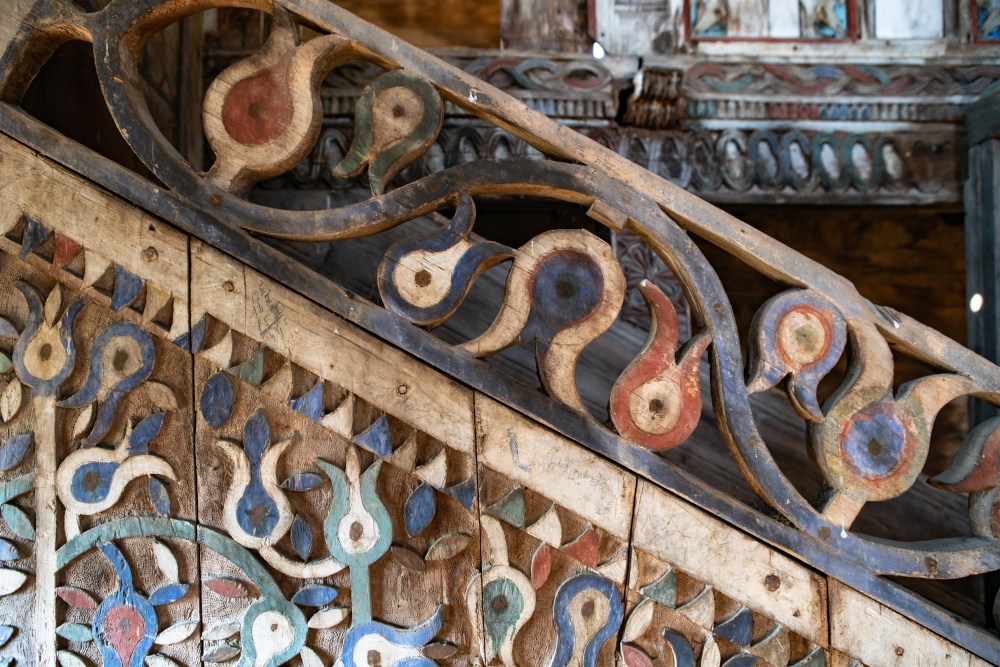
Tulips, a popular Ottoman-era motif, feature prominently in engravings on the minbar’s side wall at the abandoned Zvare Mosque and in openwork detailing along its banister. 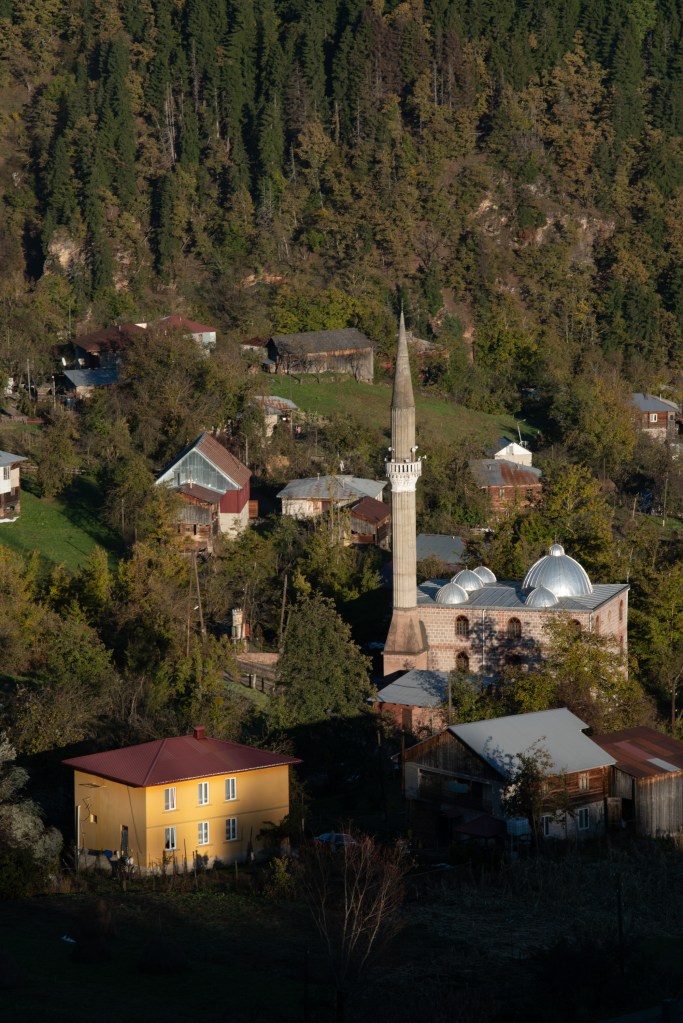
Newer Turkish style concrete mosques with their visible external domes and concrete minarets are recent additions to the rural landscape like this mosque in the village of Didachara. 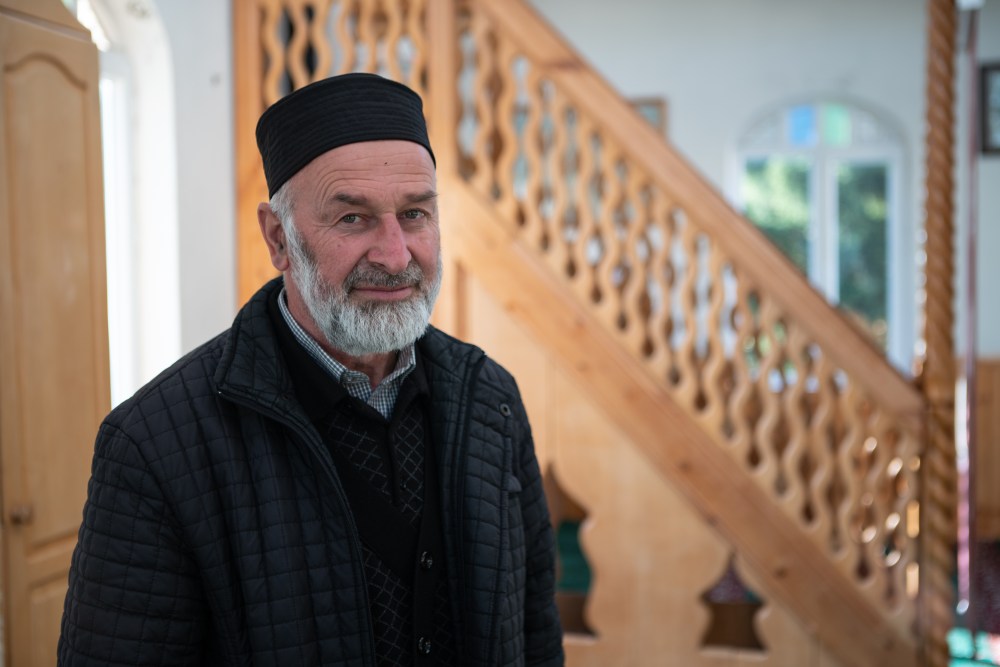
Following Georgia’s independence in the 1990s, it was villagers like Aslan Abashidze who along with fellow believers reopened some of tdjara’s surviving wooden mosques, carrying out patchwork repairs with the most affordable material they could find. 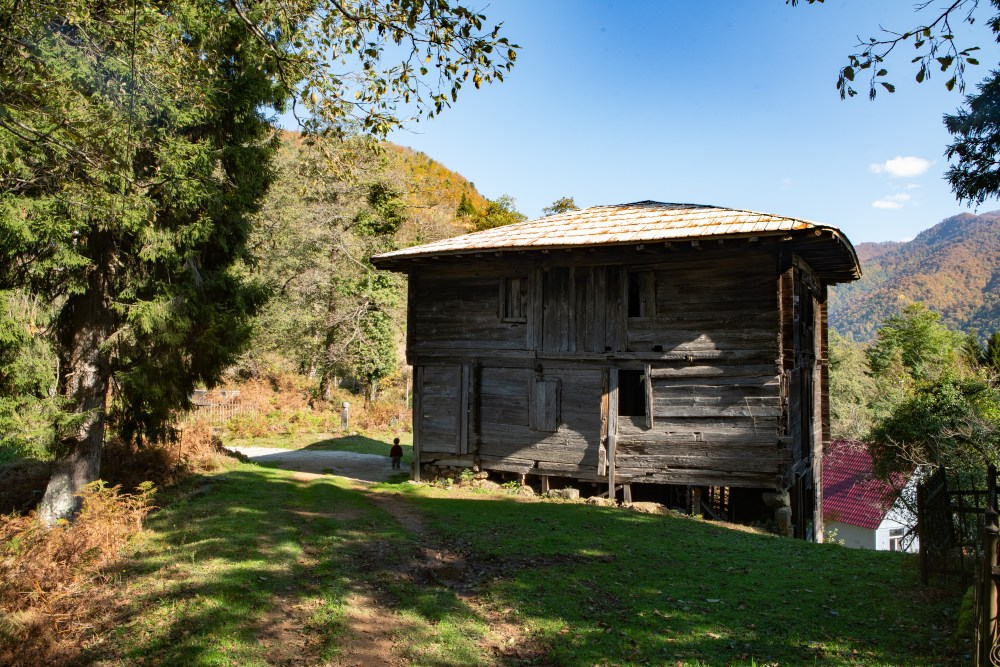
Outer view of the abandoned early to mid 19th century wooden mosque of Gulebi. 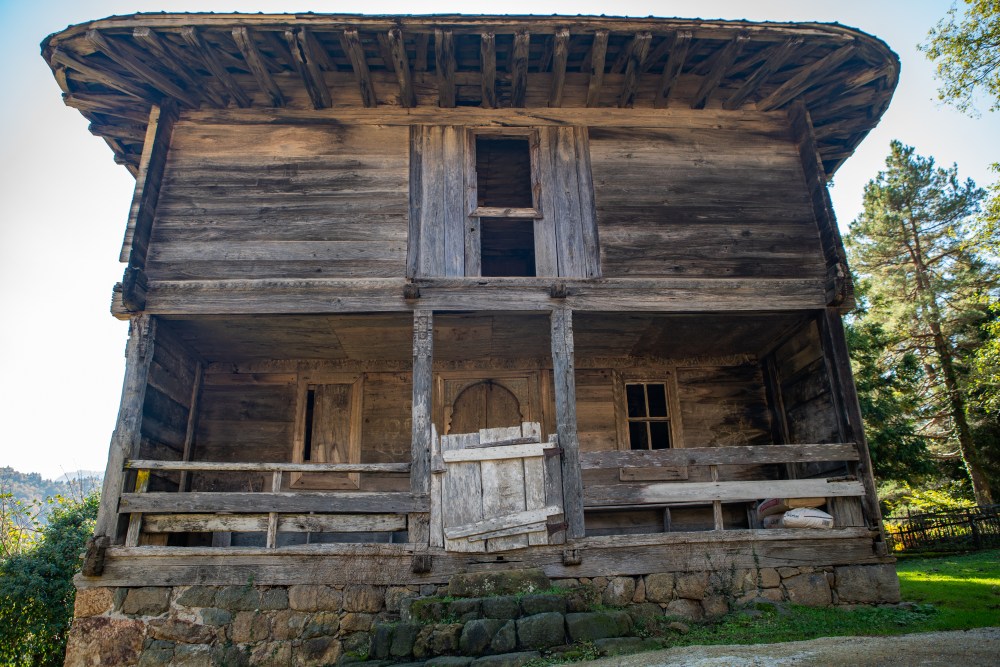
Although tottering on the brink of decay, Gulebi Mosque’s outer façade retains its original architectural form with its distinctive rounded eaves and tiered stone foundation. 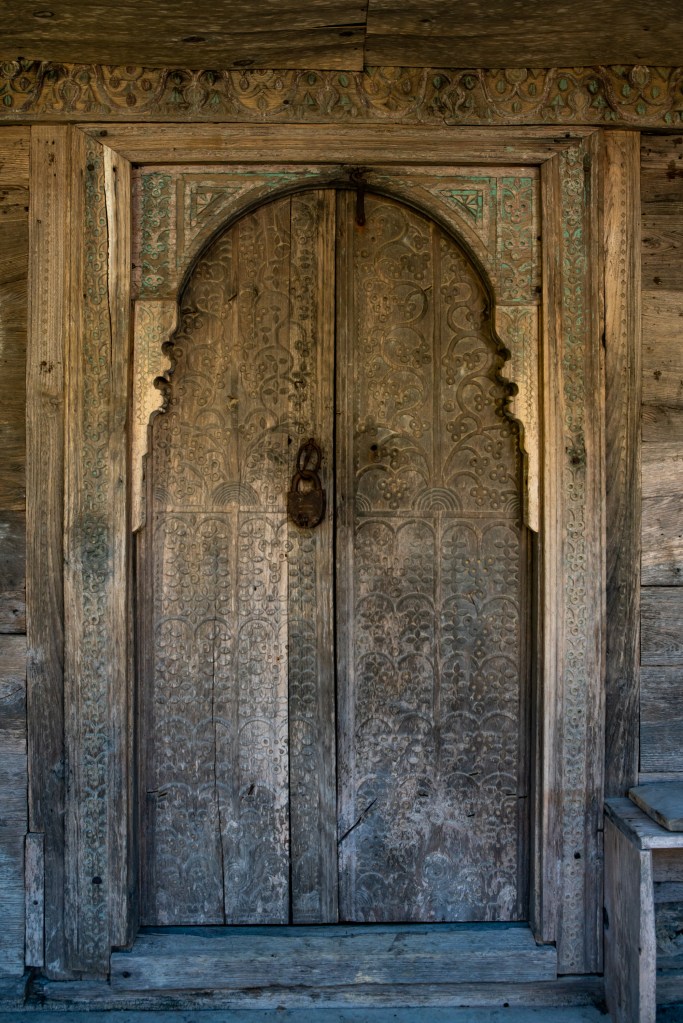
Details of the decorative carvings that includes grape vines on the doors of the abandoned mid-19th century Gulebi mosque. 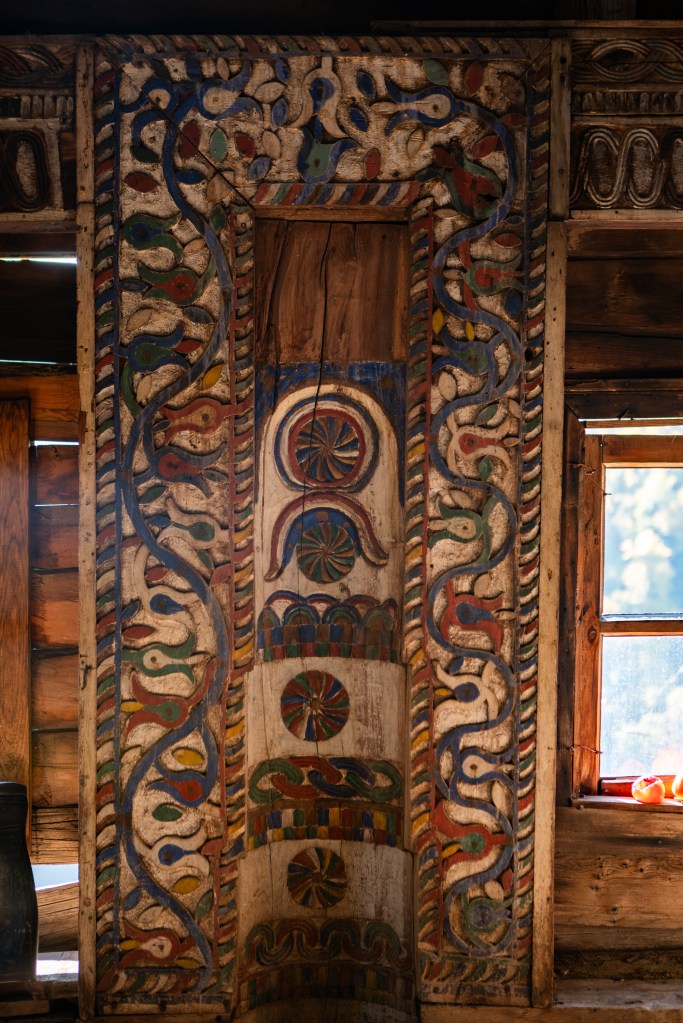
Four “borjgali” motifs, a ancient Georgian motif of a radiating spiral symbolizing the sun in decorate the mihrab of abandoned Zvare mosque that was built in 1834.

